
There’s a part of every creative project that few are actually excited to do. It’s the proofread you’ve already done twice, or the formatting pass where you’re moving commas around for the fourteenth time, or that third read-through where your eyes have officially stopped reading and started skimming over sentences you wrote a week ago. You know exactly the part I’m talking about, because everyone who has ever made anything has felt their brain check out somewhere around that stage of the process (though, no hate if you love proofreading, because you deserve some kind of trophy if that’s the case).
That’s the boring half. And here’s the thing nobody is really telling you about AI, because everyone is too busy arguing about whether it’s going to take over the world by next Tuesday.
AI is genuinely, almost suspiciously good at the boring half.
What it’s actually good at
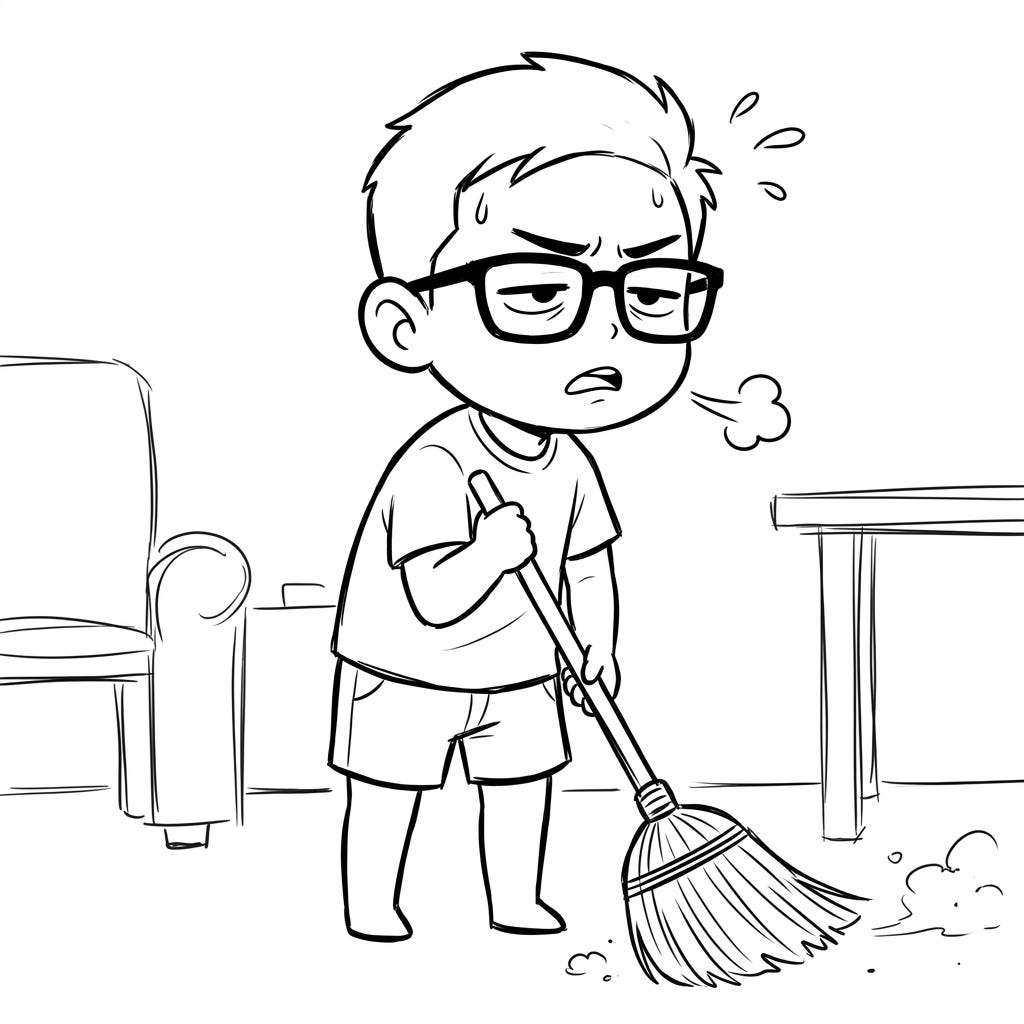
I’ve worked as a creative for over twenty years, which means I’ve done my fair share of proofreading, light formatting, and tedious cleanup work. So when I say AI is good at this stuff, I’m not guessing about it. It catches the kind of small errors that vanish from your sight after you’ve stared at the same paragraph for too long (ex: “Looks like you meant to say ‘thought’, but you said ‘though’. Don’t worry champ, I got this!”). It handles light formatting work without sighing about it. It will rephrase a clunky sentence for you so you can finally see what you actually meant to say, which is honestly one of the more useful things a writing tool has ever done (for this guy who doesn’t English so well, at times).
The same goes for quick proof passes, small graphic edits, and the kind of cleanup work you do at the end of a project when your creative energy is gone and you just want the thing to be finished. AI is good at all of it, most definitely, and I see no reason to be coy about that.
Some creatives feel weird about admitting they use AI for anything at all, like admitting it costs them their membership to some sort of Creative’s Costco. Worry not, my friends: it doesn't. A calculator is useful, as is spell-check. Saying "this tool helps me power through the unfun parts" doesn't take anything away from the rest of your work. It's just a description of how a tool works.
Now, I’ve spent a good amount of time praising what AI does well. Is it perfect though? Welp…
Where it falls apart
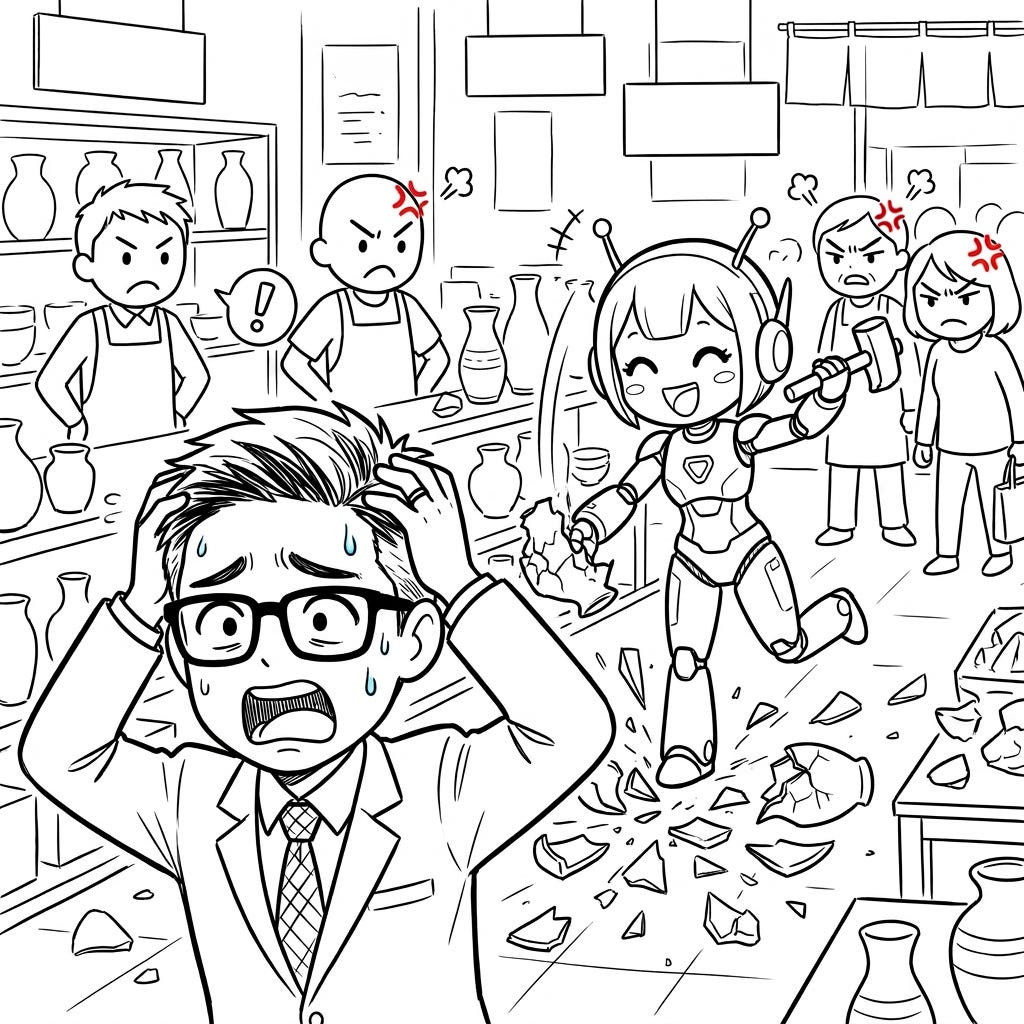
Now here’s the other half of the story, and this is where the discourse gets the whole thing backwards.
AI is bad (not bad meaning good, like they used to say in the 90s), sometimes spectacularly bad, at the part of creative work that is actually creative. The part where you’re figuring out what the thing should even be. The part where your specific point of view, your taste, and your weird particular brain are the entire reason the work has any reason to exist in the first place.
Hand that part over to AI, and what you get back is the literary equivalent of stock footage. It’s technically functional but entirely forgettable, like a playground slide that’s only a foot high. There’s no point of view in it because there was no point of view going into it. You can feel the absence the moment you start reading, even if you can’t articulate exactly what’s missing.
This is the stuff people love to hate, and with good reason. It’s content the machine generated, that the person didn’t bother to read carefully, and that the audience scrolled past without thinking. The whole transaction happened, and the world is now slightly more cluttered than it was before, with no actual meaning added to it.
That isn’t AI’s fault, though. AI didn’t volunteer for the job. Somebody pointed it at a creative decision and asked it to make that decision for them, and AI did the best it could, and its best was a sentence that started with the words “And honestly”.
The skill is knowing which half is which
So what’s a creative rockstar like yourself to do? The real skill of using AI well is being able to look at your own work and know which half is the boring half and which half is the part that’s actually yours.
The boring half is execution. You already know what you’re trying to make, and now you have a seemingly unsurmountable grind ahead of you. Fear not though, Creative King (or Queen… or… Chief); that’s where AI earns its place, and that’s where you should be using it without guilt.
The creative half is something completely different. It’s where the decisions live. What is this thing actually about? Who is it for? What’s the specific observation, the unusual angle, the small true detail that only you would have caught? That part isn’t safe to outsource, because the second you outsource it, the thing you’ve made stops being yours, and people can tell. They might not be able to name what’s missing, but they can feel it.
The trouble most people are running into right now is that they’ve quietly flipped the equation. They’re handing AI the creative decisions and then doing the proofreading themselves, which is the precise opposite of how this should be going. It’s like paying some random dude to paint for you, then taking that painting back to your studio and trying to fix it yourself. You’re gonna have a bad time.
Take back the part you actually love
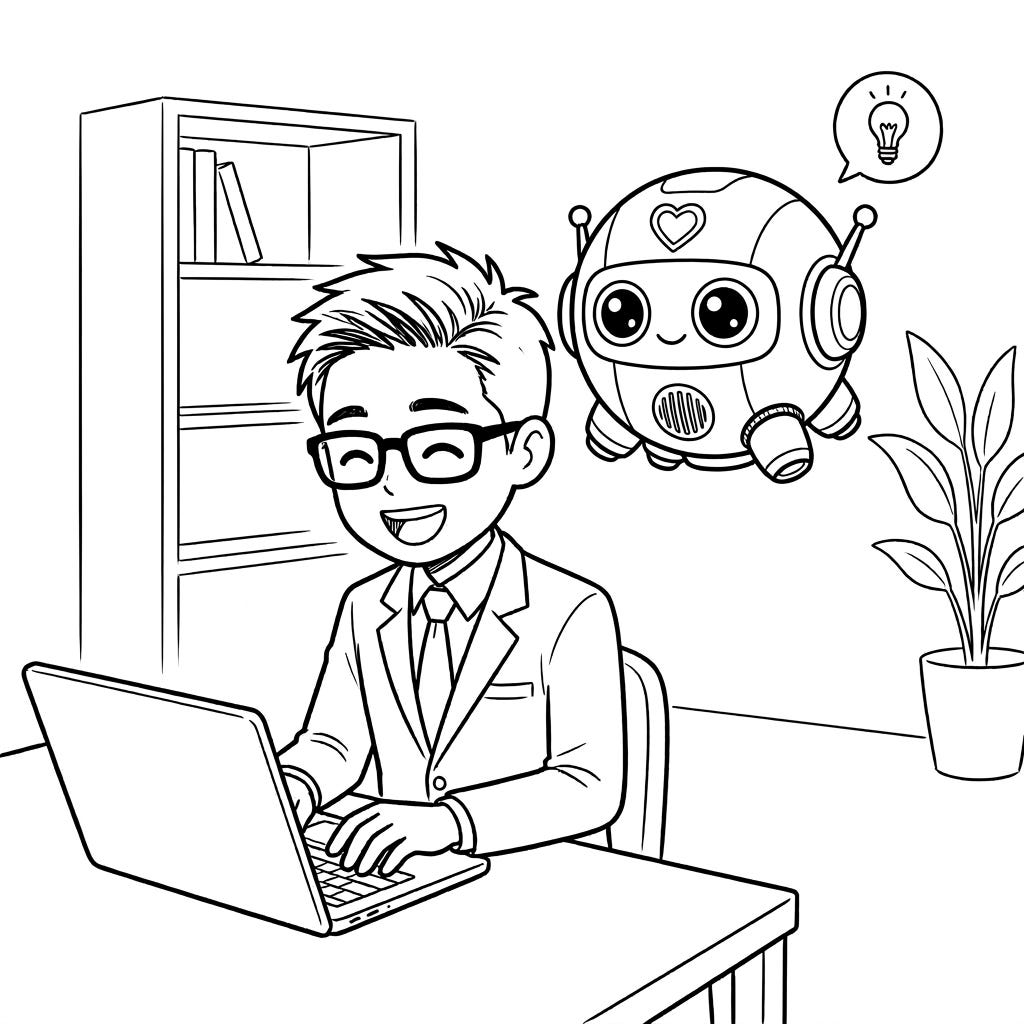
If you’ve been using AI on the wrong half, here’s the good news. The half you’ve been handing off is still right there, waiting for you to pick it back up (like that cute puppy you’ve been neglecting).
The next time you sit down to make something, try this. Let AI handle whatever part of the project bores you. Hand over the proofread, the formatting, the cleanup, the small graphical work, all of it. Don’t feel weird about giving it the grunt work, and don’t feel like you have to defend it to anyone. That part of the work was always a chore, and the tool exists to handle chores (I wish I had a tool to handle chores when I was 10, but alas…).
Then take back the part you actually love. The opening line that nobody else could have written. The angle that only makes sense because you’ve lived your specific life. The choice of which detail to include and which one to leave out. The voice that makes the thing recognizably yours when somebody reads three sentences of it without your name attached.
That’s the part you got into this for. It’s the part you’ve been quietly losing reps on, and it’s the part the machine cannot do for you, no matter how nicely you ask (*glares at the chatbot*). You don’t have to fight AI to get it back. You just have to stop handing it the part that was yours to begin with, and start using the tool for the part you were never going to enjoy doing anyway.
The boring half belongs to the machine now. The good half is still yours. Go take it back.