

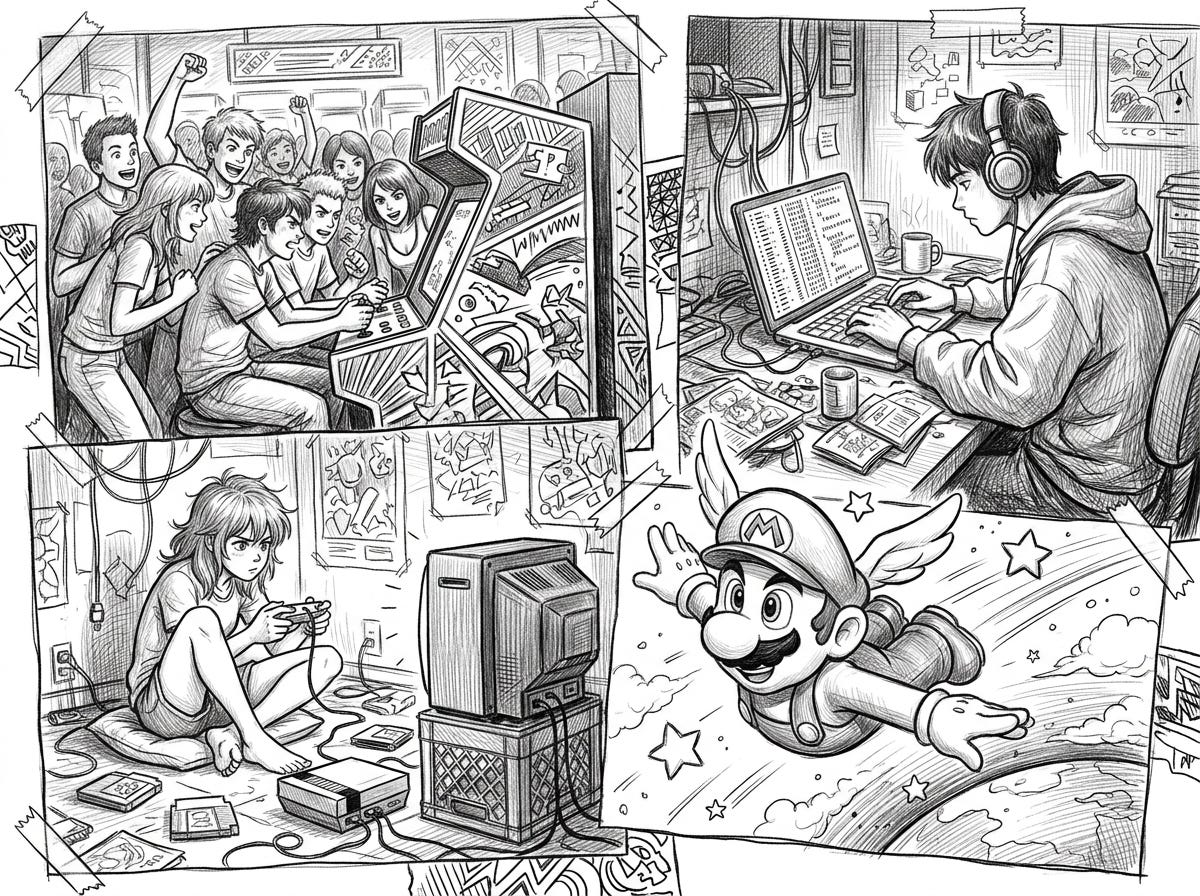
In a 2026 shocker, some of the most talked-about PC games this fall first came out on the Nintendo 64 and GameCube (if that made your back hurt, you’re in good company).
New hardware got expensive this year. Sony’s standard PS5 now costs $649.99, the Switch 2 costs $499.99, and Sony says new PlayStation games will stop shipping on discs in 2028. So players are going back to the games they already own, and fans are using AI coding tools to get those games running on modern PCs faster than ever. That speed has also split the community that built this scene. If you jump in without knowing which projects are which, you can end up with a buggy port nobody maintains, or one built on years of volunteer work without those volunteers’ blessing.
In this article, we get into the four things you need to know about AI and the retro revival, so you can decide what’s worth downloading (or whether you should “stop all the downloading” altogether).
Pricier consoles, disappearing discs and a return to yesterday’s back catalog.
Two things pushed players toward “oldies but certified goodies” this year.
The first is RAMageddon, the nickname for a memory-chip shortage driven by AI data centers buying up supply (which I’ve talked about at length). Consoles use those same chips, so their prices climbed. Sony raised the standard PS5 by $100 in April, to $649.99. Nintendo raised the Switch 2 to $499.99 on September 1, citing memory costs and tariffs.
The second is the slow fade of physical games. On July 1, Sony announced it will stop making discs for new PlayStation games starting in January 2028. Days earlier, Rockstar confirmed that boxed copies of Grand Theft Auto VI will hold a download code with no disc inside. A Change.org petition called “Don’t Kill the Disc” passed 333,000 signatures by July 20, and its argument fits in one line: “A disc is a real game you own.”
Put those together, and the cheapest game library most people have is the one already sitting in a closet (hi there, N64 Rumble Pak). Those cartridges and discs don’t go up in price, and no store can pull them from your shelf. It gets wilder: turns out, a modern PC can often run them better than the original hardware did, at higher frame rates and in widescreen.
Speaking of which…
Attack of the AI-assisted port: recompilations & ROM hacks take center stage.
Fans are using AI in three kinds of projects right now.
The first is the recomp, short for static recompilation, which translates a game’s original code into a program that runs natively on a PC. An emulator works more like a live interpreter, translating the game’s instructions on the fly every time you play. Picture an interpreter repeating a speech line by line as it’s given, next to a translator who turns the whole book into English once so anyone can sit down and read it.
The Wave Race 64 recomp shows how this looks in practice. Its developer says Claude, working through Claude Code, wrote every line of the project’s code while the human dev set the goals, tested each build and reported problems back. It sits on top of N64Recomp and the RT64 renderer, both built by other developers. Fable 2, the only mainline Fable game that never came to PC, got an unofficial port in September. Its developer used Qwen, an open-source AI model that runs on a home computer, had the game running in about an hour, and then worked through a lot of trial and error to make it beatable.
Emulators are moving just as fast, all the way up to the PS5. KytyPS5 and SharpEmu, two of the most notable PS5 emulators, both allow AI help in their contribution rules, as long as contributors understand and can explain the code they submit. Users have posted a game running on KytyPS5 at 40 to 50 frames per second, though it takes an RTX 5090 graphics card to get there. Going the other direction, a developer named Sword used Claude to help port the PlayStation 2 emulator PCSX2 to jailbroken PS5s, meaning consoles modified to run unofficial software. The result plays physical PS2 discs on a PS5, which Sony never offered (much to the delight of those angry with Sony over the physical disc shenanigans).
ROM hacks, which patch the original game file directly, are getting the same treatment. Psicopompo’s Super Mario Kart Fullscreen Edition gives the SNES classic’s single-player races the whole screen, where the original saved the lower part for a map and rear-view mirror. Making that work meant reworking the camera, the HUD and the collision checks, and the patch already runs on a real SNES. Its GitHub page notes that development relied heavily on AI assistance.
If you want to try one, plan on supplying your own copy of the game (because your boy does not encourage “sailing the seven seas” for software). The Wave Race 64 recomp, the Fable 2 port and every ROM hack need one, and that requirement is what keeps these projects on safer legal footing.
All that being said, there is a tension which has come to a head. At the center of it all is whether AI should be touching the retro gaming scene at all.
The scene has spoken: if it’s vibe-coded, then the vibes are bad.
The loudest pushback is coming from inside the retro scene itself.
Many of these ports sit on top of decompilations, where volunteers rebuild a game’s source code by hand, function by function. Therein lies the fundamental problem that many have with AI in this space. For example, Super Smash Bros. Melee’s decompilation took more than six years before it hit 100 percent on September 7. When an AI-generated Banjo-Tooie recomp appeared this month, DarioSamo, the developer behind Banjo: Recompiled, said it used the framework and renderer his team built. He said his projects have a clear no-AI stance and that his team will take the time a proper Tooie port needs: “We’re not interested in engaging a race to the bottom.”
On October 19, Decomp.dev, a site that tracked hundreds of decompilation projects with progress bars, stopped accepting new ones. Its creator, who goes by encounter, said people have been forking unfinished decompilations, completing them with AI and racing out half-working ports. Encounter said the progress bars, built to keep volunteers motivated, had turned into “a hollow numbers game.”
Quality is the other complaint. A Mischief Makers recomp that lists Claude as a contributor drew criticism for its problems at launch, and a heavily AI-coded GoldenEye 007 recomp was called out for critical bugs. The team behind a hand-built Donkey Kong 64 port also found that a rival AI version had quietly modified RT64, the renderer many N64 ports share.
So communities are drawing lines. The N64 Recomp Discord won’t showcase or support vibe-coded projects, meaning ones built by prompting an AI without understanding the code it writes. The mGBA and QEMU emulators reject AI-generated code, and the PS3 emulator RPCS3 told contributors to “stop submitting AI slop code.” For players, the practical risk is a port that breaks and never gets fixed, because the person who prompted it may not know the code well enough to repair it.
Everyone in this argument loves these games, which is a big part of why it has gotten so heated.
Know before you go and play the games that you can feel good about.
Each of these projects comes with a backstory, and a minute of fact-checking tells you what you need to know.
Both camps have a fair case. People using AI can point to the volunteers who used it to close out the last stretch of Melee’s decompilation, and to Fable 2 finally running on PC. People building by hand can point to the Banjo-Tooie recomp, Decomp.dev’s closing and a run of buggy launches. Which of those matters more is your call, and you can only make it once you know how a project was made.
So before you download anything, run through a quick check:
Read the project’s README for an AI disclosure. The Super Mario Kart hack listed its AI use only on GitHub.
Look at the credits. A well-made port names the tools it sits on, like N64Recomp and RT64.
If you want to support human-only work, look for projects that say so up front, like DK64: ReKONGpiled and the upcoming Super Mario Galaxy port Astrocore.
An AI-assisted port that gets a game you love running on your laptop tonight has real value. But, so does a hand-built port that someone will still be maintaining five or more years from now.
These old games got a second life this fall because people cared enough to rebuild them, some by hand over more than six years and some with AI help in a fraction of that time. Whichever version ends up on your screen, you’re the one holding the controller, and you get to decide which kind of work earns your time.
Sources
Nintendo raising Switch 2 price by $50 due to rising memory costs (NewsNation, May 8): Switch 2 to $499.99 on Sept. 1; PS5 up $100 to $649.99 in April
Winnipeg petition against Sony’s decision to scrap game discs (CTV News, July 20): July 1 announcement, January 2028 end date, 333,000 signatures
Sony faces backlash over plan to end physical PlayStation discs (Scripps News, July 7): petition quote
PlayStation fans pushing back against Sony’s plan to end physical discs (TechRadar, July 7): GTA VI download code in the box
AI-coded PC ports of old console games keep coming out (Dot Esports, updated Oct. 16): Wave Race 64, Fable 2, Mischief Makers, GoldenEye, N64 Recomp Discord rule, DK64: ReKONGpiled, Astrocore
PS5 emulator updates have 6 games “fully playable at 60 FPS” (GamesRadar via Yahoo Tech, Sept. 28): KytyPS5, SharpEmu, Demon’s Souls, RPCS3 quote
Jailbreak: AI Hacked Emulator Unlocks PS2 Games on PS5 (Bleeding Fool, Oct. 16): PS5SX2, Sword, Claude-assisted PCSX2 port
This AI-Assisted Super Mario Kart ROM Hack Removes the Game’s Annoying Single-Player Shortcoming (Time Extension, Oct. 5, updated Oct. 6)
Banjo-Kazooie PC port developer says AI-generated PC ports are ‘a race to the bottom’ (VGC, Oct. 3)
One of the biggest game decompilation sites is closing because AI has ‘broken the community aspect’ (VGC, Oct. 19): Decomp.dev
Decompilation on Steroids: Why AI Is Suddenly Cracking Open Old Software (TechSpot, Oct. 11): Melee final stretch, matching decompilation, DK64 and RT64, mGBA and QEMU