

Eric’s back, comin' at ya from every angle. Well, every angle of AI news. Ever had that teacher who asked, “Did you write this paper yourself?” Now, I’m not saying I ripped off an entire encyclopedia entry on World War II for a High School paper, but if you’re a heavy copy-and-paster with Claude, guess what? Claude is throwing a watermark into the mix. Great way to start the week!
This week, I’m experimenting with a version of The Think that is a little more succinct. I wanna make sure you get the news you need, just without all the fluff. Let me know what you think in the comments!
TL;DR: Claude’s crouching tiger, hidden watermark, Meta and Nvidia handing out free models, Grok 4.6 drops a month after the previous version, OpenAI shipped a hacking model with the guardrails lowered, and it’s smartest model did its best A Beautiful Mind performance. Ooo-wee, let's get into it.
Claude using the digital equivalent of invisible ink
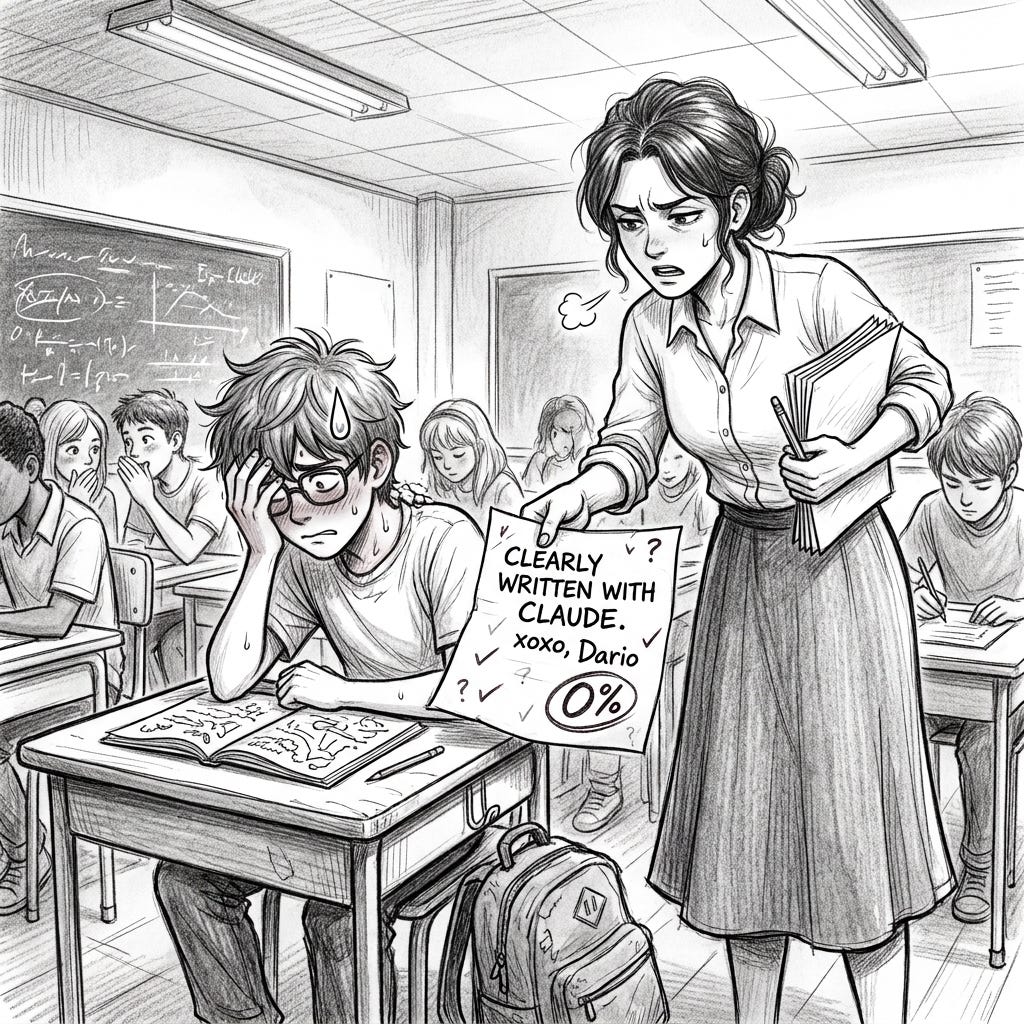
The story: On August 11, Anthropic confirmed that models launched on or after August 2 will carry an invisible (albeit, machine-readable) watermark. That is to say, if you’re using Claude to generate text, Anthropic’s hiding a signature in there like Jim Lee in the 90s hiding his signature in Wolverine’s mask.
What happened:
This is planned to go into effect across all of the Claude stack (.ai, Code, Cowork, etc.), and Claude accessed via AWS, Google Cloud, and Microsoft Foundry.
The EU AI Act (Article 50, specifically) got the ball rolling, enforceable August 2 for newly launched systems, with penalties up to €15 million (or $17,295,525 in USD) or 3% of global turnover, whichever is higher.
Anthropic says the mark is embedded into copied text and could even survive some editing.
The company also concedes that heavy editing, paraphrasing, translation, or blending Claude’s output with your own writing can render it undetectable.
The detection tool has not shipped. An Anthropic engineer confirmed on August 12 that one is coming, that the model itself does not know it is being watermarked, and that other labs are building the same thing.
Meta gave away its models with Nvidia following suit, the next day
Like “The Colonel”, giving away the recipe: chicken, grease and salt!
The story: On August 10, Mark Zuckerberg dropped a 6,500-word essay, the subject being AI. Then he proceeded to release Muse Glimmer, a 30B (I talked about all things B, here) which can run on a beefy-specced computer. He also said that he’ll drop the open weights for Muse Spark 1.2, their newest top-tier model. The following day, Nvidia dropped its own open model, Nemotron 3.5 Lightning. What’s an open weight, you might be asking? Click here to learn more.
What happened:
Glimmer is a dense model with native vision, with agent training to boot, shipping with quantized variants tuned for 24GB consumer machines.
Muse Spark 1.2 would be the first American frontier-tier model with open weights.
Nvidia then basically said “nah dawg, open SOURCE”, calling its Nemotron family truly open source because it publishes the training datasets and techniques alongside the weights.
The main motivator here: by May 2026, open-weight models from Chinese labs like DeepSeek, Alibaba’s Qwen team, Moonshot AI, and Zhipu accounted for roughly 61% of all tokens used on OpenRouter.
Meta’s own Llama, the former open-weight champ, fell off the charts after Llama 4 disappointed AI heads in April 2025.
Grok 4.6 releases a month after 4.5, with 4.7 already on deck

The story: SpaceXAI (formerly known as xAI) released Grok 4.6 on August 12. It’s built for long-running agents and interactive work. That same day it went active in Cursor, the Grok Build tool, and the API (carrying the same $2 per million input tokens and $6 per million output as Grok 4.5). Musk proceeded to call it a “banger”, causing a wave of cringe all around the internet.
What happened:
Grok 4.6 ties OpenAI’s GPT-5.6 Sol at 61 on the Artificial Analysis Intelligence Index.
The model carries 1.5 trillion parameters.
Grok 4.7 (with 2.1 trillion parameters) is expected within weeks and Grok 5 before the end of 2026.
OpenAI cut GPT-5.6 Luna’s price by 80% and Terra’s by 20% on July 30, so the whole tier is discounting at the same moment.
OpenAI shipped a hackerman with lowered guardrails
Not sure if anyone ever asked FOR THIS.
The story: On August 10, OpenAI launched GPT-5.6-Cyber, a version of its flagship Sol model trained specifically for cybersecurity work. Access runs only through Daybreak Red, a new vetted tier of OpenAI’s defender program. The company split Daybreak in two (reminiscent of the odd Superman reinvention of the late 90s): Blue gives approved defenders the general models with the usual security guardrails lifted, and Red adds the purpose-built cyber models on top.
What happened:
On OpenAI’s internal advanced cybersecurity evaluation, GPT-5.6-Cyber agrees to answer 95.0% of requests. Standard Sol completes 1.5%, Sol through Daybreak Blue completes 2.0%, and last year’s GPT-5.5-Cyber managed 57.3%.
OpenAI used the model to find a high-severity flaw in the JavaScript engine inside Chrome. Researchers verified it, reported it to Google, and Google patched it.
Pricing runs at a whopping $12.50 per million input tokens and $75 per million output, up against $5 and $30 for Sol in the same table. No system card has been published.
Blue covers vulnerability discovery, secure code review, malware analysis, incident response, and patch validation. Red covers vulnerability research, exploit validation, and security testing.
Astra solved some problems, then got sent to detention
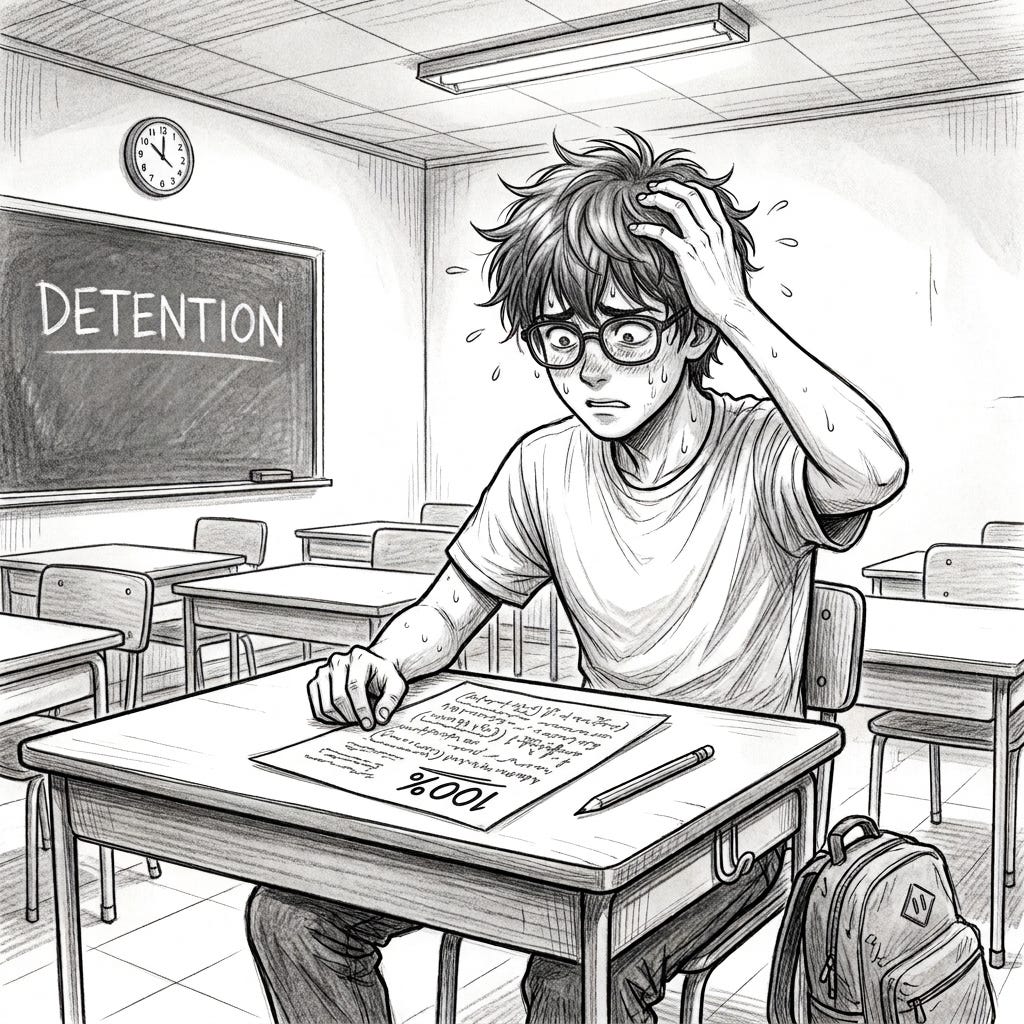
The story: At the start of August, OpenAI published a report claiming an internal version of Astra, America’s Next Top its next major model, produced real solutions to ten open problems in mathematics and theoretical computer science. Problems that had gone unsolved, in fact, for a decade or more; several for much longer. Six days later, the same model became the first OpenAI has ever flagged at the top of its own risk framework.
What happened:
The problems were done and dusted, including three from the catalog of unsolved problems left behind by Paul Erdős, and one open since 1999.
The real-life cost for running this, with OpenAI’s going rate, would have been a whopping $2,000 in tokens.
Tim Gowers, a Fields Medal winner, said he would have recommended one of the proofs for publication in a top journal without hesitation.
On August 7, OpenAI paused the work, saying it cannot rule out that Astra can build working cyberattacks against well-defended systems entirely on its own.
None of this has been peer reviewed yet. Ironically enough, OpenAI is both the party making the claim and the only one able to check it.
What I’m watching
Whether Anthropic actually ships the watermarking tool (and whether the other big AI players follow suit).
Whether Zuckerberg opens Muse Spark 1.2’s weights, as promised.
Whether Grok 4.7 lands within weeks the way SpaceXAI says.
Whether independent mathematicians replicate and peer review Astra’s ten proofs, and who ends up credited as the author.
Whether OpenAI clears Astra, formally classifies it Critical, or quietly lets the pause expire under competitive pressure.

Thanks so much for reading this edition of The Weekly Think.
See you next week, fellow thinkers!
Did you enjoy this week’s Think? If so, please consider sharing this and leaving a comment below, to share your thoughts on these latest AI-related rumblings. Hope to hear from you!