


This edition is sponsored by Nvidia (because apparently, everything is!… just kidding). Computex happened in Taipei this week, which means leather jacket man reminded the entire tech space that it’s trying to run the whole game. There’s so much Nvidia news that I had to make a list to keep track.
The short version: Nvidia wants to be inside your laptop, on the side of your house, at the center of Taiwan’s economy, and on your dinner plate (just kidding… for now…). Meanwhile Anthropic filed paperwork to go public at a valuation that rounds up to a trillion dollars, and Microsoft used its own conference to quietly announce that it’s tired of renting its AI from other people. Woofa-doofa! Let’s get into it!
Here’s what’s covered today:
Nvidia officially entered the PC market with the RTX Spark
Nvidia and SPAN want to mount tiny AI data centers on the outside of regular homes
Anthropic filed confidentially for an IPO at a ~$965 billion valuation
Microsoft built its own coding AI to lean less on OpenAI and Anthropic
Nvidia pledged $150 billion a year to Taiwan and showed off a supercomputer the size of a fridge
(I know, seems like a LOT of Nvidia news. Just to be real here, I am in no way affiliated with them. Love ‘em or hate ‘em, they DOMINATED the news this week.)
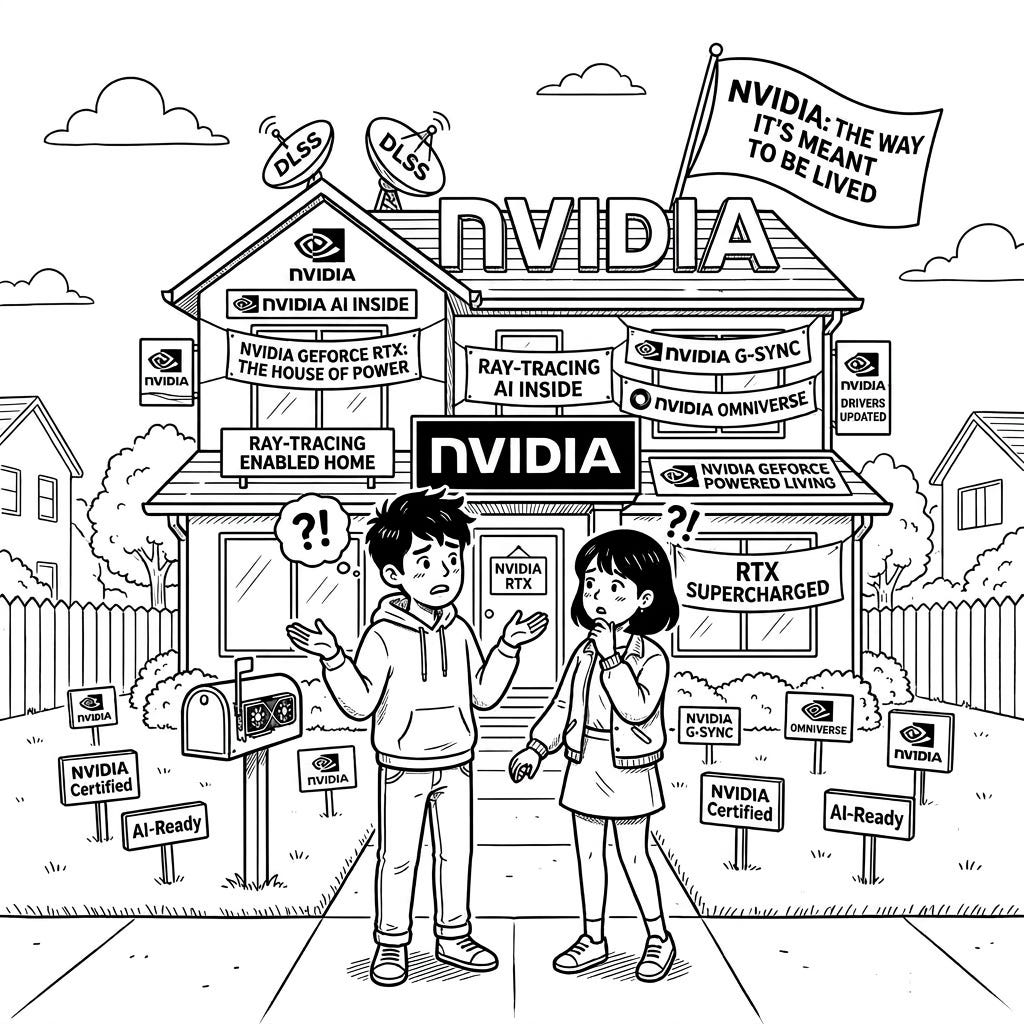
Nvidia and SPAN want to bolt a tiny data center onto your house
The story: This one sounds made up, and it is very much real. Nvidia is partnering with a smart-electrical-panel startup called SPAN, plus homebuilder PulteGroup, to mount cabinet-sized mini data centers on the outside of regular homes. They’re called XFRA nodes, and the idea is to run AI workloads using the spare electrical capacity your house isn’t using, while knocking money off your power bill. The first 100 pilot units go onto new PulteGroup homes in Q3 2026.
What happened:
Each XFRA box reportedly holds 16 Nvidia RTX Pro 6000 Blackwell GPUs, 4 AMD EPYC CPUs, and 3TB of RAM, all liquid-cooled, in a unit about the size of an HVAC condenser.
The hardware is built by Dell and serviced by SPAN, and it mounts outside next to your AC and electrical gear.
The trick is that the average American home only uses about 40% of its electrical capacity, so XFRA runs compute during the windows when your house is drawing little power.
Homeowners get a premium smart panel, battery backup, sometimes solar, and discounted (occasionally free) electricity and internet in exchange for hosting a node.
SPAN claims it can deploy 8,000 of these units roughly six times faster and at one-fifth the cost of building a comparable 100-megawatt data center.
AI runs on sweet, sweet electricity, and the grid can’t keep up. U.S. data centers ate more than 4% of the country’s entire electricity supply in 2024, and that figure could pass 9% by 2030. Building a new power-hungry data center can take over a decade once you count the wait for grid hookups. SPAN and Nvidia found a way around that wait: treat thousands of houses like one big distributed computer, using power that’s already sitting there unused. Think of it like carpooling, except the empty seats are spare amps in your breaker box and the riders are AI workloads (and not a dummy you’re using to scam the toll booth, though some AI critics may argue otherwise).
If you’re a homeowner, this is one to keep an eye on, especially if you’re buying new construction in the Southwest where the pilots are landing. The pitch is free or cheap power in exchange for a humming box on your wall. Whether that trade is worth it is going to depend entirely on the fine print, so read it carefully before you let a chipmaker move into your side yard. And let’s not forget: these may become tempting targets for copper thieves AND those with the anti-AI sentiment.
Nvidia is now coming for your laptop too
The story: On May 31 and June 1 at Computex, Jensen Huang officially unveiled the RTX Spark, an Arm-based superchip for Windows laptops and small desktops. This is the chip the rumor mill spent a year calling “N1X” and “N1.” It packs a 20-core Nvidia Grace CPU and a Blackwell GPU onto one piece of silicon with up to 128GB of unified memory, and it ships this fall in PCs from Dell, HP, ASUS, Lenovo, MSI, and Microsoft.
What happened:
Huang said this on stage, and he wasn’t being coy: “A long time ago Nvidia used to be a GPU company.” YOU DON’T SAY.
More than 30 laptops and 10 desktops are slated to launch this fall with the RTX Spark inside.
Huang called the move the biggest reinvention of the PC since the smartphone reinvented the phone.
Nvidia stock jumped over 6% on the announcement, Dell climbed over 10%, and HP gained 8%.
The chip is built to run “agentic AI” locally, meaning AI agents that keep working in the background without phoning home to the cloud every two seconds.
For about two decades, the Windows laptop world has belonged to Intel and AMD, with Qualcomm elbowing in on the Arm side. Now Nvidia walked in carrying the biggest AI-chip business on the planet and proclaimed that it was all that and allllll the bag of chips (figuratively and literally, if you think about it). The reason this matters is the design philosophy underneath. These chips are tuned to run AI locally on your machine, which is the same direction Apple has been pushing with its M-series silicon. A real three-way fight over the future of the personal computer just broke out, and the prize is which company gets to define what an “AI PC” even means (meanwhile, Skynet could not be reached for comment).
If you were planning to buy a Windows PC in the next year, it might be worth holding out until fall to see the first RTX Spark machines, or at least to see what the new competition does to the price of everything else. Will these new PCs be winners or wieners? Stay tuned peeps. It’s gonna be a show, fa-sho!
Anthropic filed to go public at nearly a trillion dollars

The story: On June 1, Anthropic (the company that makes Claude) told the government it wants to start selling pieces of itself to the public (aka errbody can get a slice ‘o the pie, as long as they got the cash to do so). Right before this, Anthropic raised a fresh $65 billion, and that money raise put a price tag on the whole company of about $965 billion. They’re basically $35 billion away from being worth a trillion dollars, and you can’t even buy the stock yet.
What happened:
That $965 billion price tag is now bigger than OpenAI’s, which sits around $852 billion. Anthropic quietly passed its biggest rival.
The company is reportedly on pace to bring in about $47 billion a year, up from around $10 billion a year ago
The $65 billion came from a who’s-who of big investment firms (Sequoia, Altimeter, Dragoneer, and a bunch more).
On top of that, two firms (Apollo and Blackstone) are lending Anthropic another $36 billion, which pushes the total pile of new money close to $100 billion.
Anthropic isn’t alone. Elon Musk’s SpaceX is also lining up to go public this week, and OpenAI is expected to follow soon. Everybody’s heading for the stock market at once.
A few weeks back I mentioned that Sam Altman and Elon Musk were both pointing their companies toward the stock market. Three AI heavyweights (Anthropic, Elon Musk’s SpaceX, and OpenAI, the company behind ChatGPT) are all about to let everyday people buy in, around the same time. That’s a big deal, because the stock market is the most public scoreboard there is. If people throw cash at the thing and the prices climb, it’s a giant vote of confidence (in Anthropic and AI, in general). If the prices flop, welp, might not be the greatest look for these intelligences that are artificial.
Of note is how fast this all happened. Anthropic raised $65 billion and filed its “we want to go public” paperwork in the same week. A year ago, a company raising a single billion would’ve been front-page news. The fact that this barely raises an eyebrow now is the part that should actually raise your eyebrow.
Microsoft built its own coding AI because why not
The story: On June 2 at Microsoft Build 2026, Satya Nadella unveiled Project Polaris, Microsoft’s homegrown AI coding model. Polaris is set to replace GPT-4 as the reasoning engine inside GitHub Copilot by August. At the same conference, Microsoft also made Anthropic’s Claude a first-party option inside Azure AI Foundry, sitting right next to OpenAI, DeepSeek, Llama, and Mistral.
What happened:
Microsoft has spent the AI era as the cloud provider and the deep-pocketed investor in other people’s models, first OpenAI, then Anthropic.
Polaris is its first serious crack at a proprietary in-house model built to go toe-to-toe with the frontier labs.
Nadella framed the shift as AI moving from “synchronous assistants” to “async coworkers that can execute long-running tasks.”
Agent Mode is now the default across Microsoft 365 Copilot, and the Windows Agent Framework was open-sourced under the MIT license.
The Pentagon also handed Microsoft the lion’s share of a $9.69 billion software consolidation contract. Good week to be Redmond.
Here’s what’s actually going on underneath the announcement, in plain terms. Microsoft is one of the biggest buyers in the world of AI tokens, which are the units of work an AI model does every time you ask it something (like tokens that peeps used to plunk into arcade machines, making many a kiddo’s allowance disappear in an instant). Every prompt run through Copilot costs Microsoft money it pays out to model providers. When your bill runs into the tens of billions a year, eventually you start wondering why you don’t just build your own AI.
When a $3 trillion company looks at its AI costs and decides, “why for we not do that yesterday? DO NOW,” it’s a reason to take notice. Most people and small businesses won’t train their own models, obviously. The principle still holds: the more an AI tool becomes core to how you work, the more it pays to understand what you’re actually spending and whether there’s a leaner way to get the same result. Free trials are great for kicking the tires. The long-term bill decides if you’re gonna drive the thing.
Nvidia (hi, again) pledged $150 billion a year to Taiwan and showed off a fridge-sized supercomputer
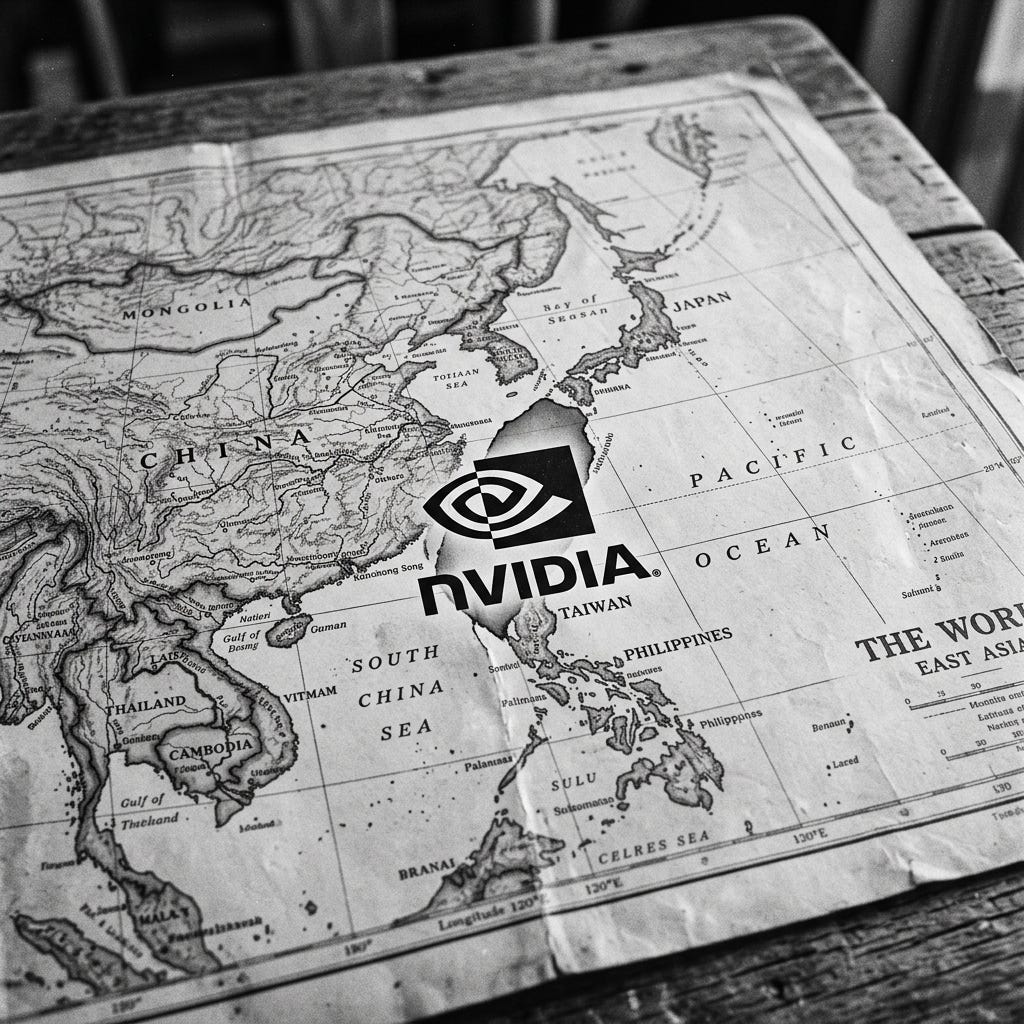
The story: Back at Computex, Huang said the quiet part out loud: Nvidia plans to spend as much as $150 billion a year in Taiwan, and it’s opening a new Taipei headquarters. Taiwan, in his words, is the “epicentre of the AI revolution.” The centerpiece of Nvidia’s booth was the Vera (which we talked about last week) Rubin NVL72, a rack-scale supercomputer that just swept multiple Best Choice Awards at the show for the new “AI factory” category.
What happened:
“Many years ago we had 10 partners. Five years ago, maybe 50 partners. Now we have 150 partners,” Huang said about Nvidia’s Taiwanese supply chain.
AMD’s Lisa Su also showed up and pledged over $10 billion of her own in Taiwan investment, so this is bigger than just Nvidia.
Vera Rubin NVL72 is the rack-scale machine behind the “AI factory” concept, which is Nvidia’s pitch for purpose-built data centers that crank out AI models at industrial scale.
The new Taipei HQ adds a long-term anchor to a relationship already moving roughly $150 billion a year through the same supply chain.
The show had basically zero cryptocurrency content this year, which tells you exactly where the Taiwanese tech ecosystem has thrown its chips.
Last week, I wrote that Nvidia was DoorDashing its newest chips to four big companies. This week the same company committed to spending more annually in one island than the entire GDP of most countries. The relationship has crossed into something that looks a lot like industrial policy run by a private company. When one firm decides to drop $150 billion a year in one place, the geopolitics around that place shift, the supply chain bends to fit, and every competitor has to draw up plans around the new center of gravity. Might have to update world maps to “Taiwan (aka Leatherjacketmanland), Sponsored by Nvidia.”
Whoever wins the AI model race, the company selling the hardware underneath all of them gets paid either way. That’s the position Nvidia is in, and this week it spent like a company that is desperate to stay there. The hardware roadmap they laid out runs well into 2027. For anyone building on top of AI, the thing to remember is that the compute you depend on is set to keep getting faster and cheaper for a while, which is worth factoring into whatever you’re planning. Worth watching, too, is who (if anyone) ever manages to challenge that position, because a market with one dominant supplier tends to get expensive for everyone downstream eventually.
What ties it all together
This was a week of enormous institutional moves. Nvidia wants in on the PC pie, floated the idea of turning houses into compute nodes, and pledged a country-sized budget to Taiwan. Anthropic took the first real step toward becoming a public company. And Microsoft made its declaration of partial independence.
Step back and look at the shape of it. The AI industry has gotten big enough that it’s now reorganizing every industry around it. Personal computing is being redesigned around AI agents. The power grid is being re-plumbed to feed AI compute. The public markets are about to get their first honest read on AI valuations. The world’s biggest software company is building its own models so it can stop paying the AI fun tax. The common thread is that AI stopped being a product you use and became infrastructure that everything else now has to bend around. Scary or innovative? Perhaps both? I’ll let you, the reader at home, decide.
What I’m watching
Whether the RTX Spark holds up on performance once reviewers get the first laptops this fall
Whether anyone actually signs up to host an XFRA node, and what the fine print really asks of them
How the SEC review of Anthropic’s S-1 unfolds, and whether OpenAI files its own paperwork before the end of June
Whether Microsoft’s Polaris truly replaces GPT-4 inside Copilot by August, or quietly slips
Whether the next big memory headline is a price drop or another shortage warning


Thanks so much for reading this edition of The Weekly Think.
See you next week, leather jacket man megafans fellow thinkers!
Did you enjoy this week’s Think? If so, please consider sharing this and leaving a comment below, to share your thoughts on these latest AI-related rumblings. Hope to hear from you!