

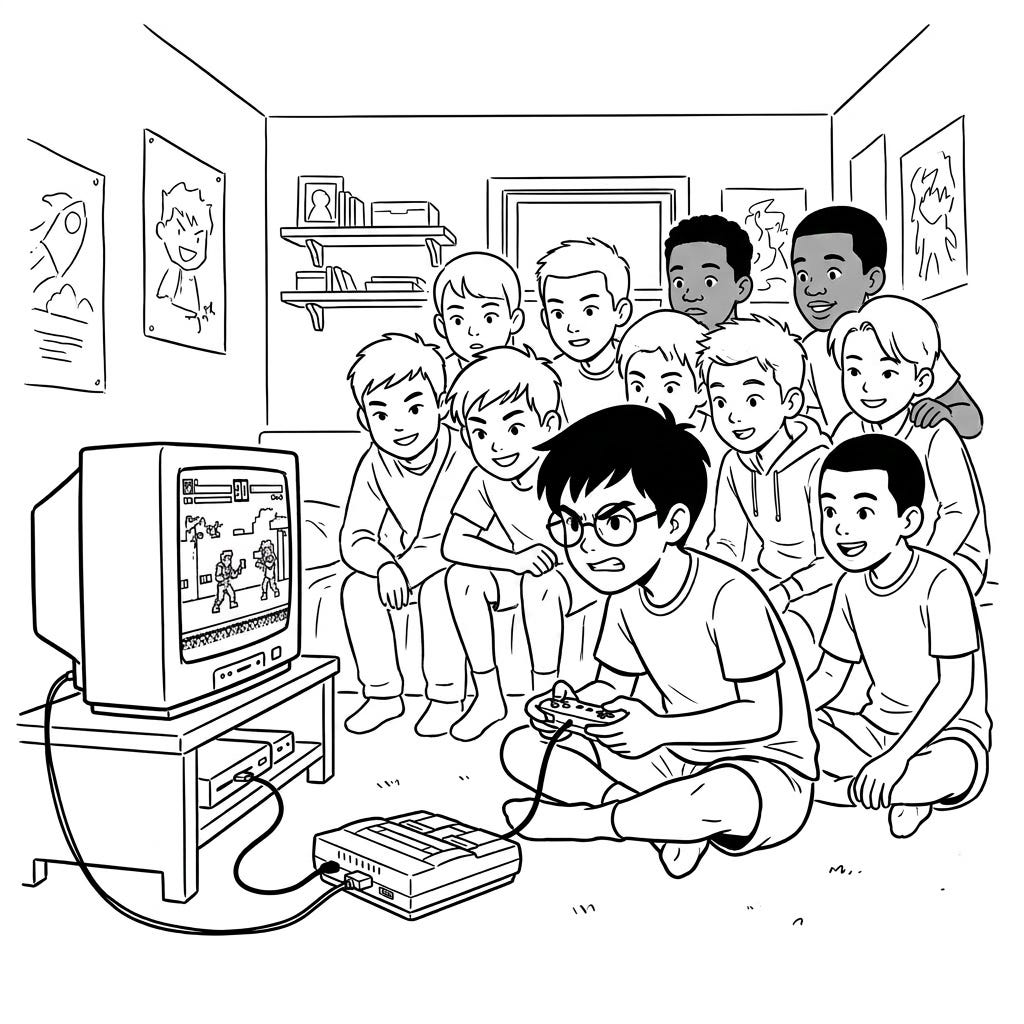
When I was a kid, “AI” meant one thing and exactly one thing. It was the opposition.
The boss at the end of the level. The enemies between you and the boss. The obstacles, the rival racers, the CPU in NBA Jam who somehow knew you were going for that slam dunk. Whatever shape it took, the objective never changed. You were there to beat the AI, no matter how clever it was (if you got frustrated, you lowered the difficulty to “easy”😓).
Those were very cool afternoons. Firing up the SNES to see what tomfoolery would come out of the latest rental from Eastman Video (which later got bought out by Hollywood Video, a sentence/thought that makes my back hurt). A slice of pizza in one hand, a joypad in the other, and a single clear mission for the day.
That’s the thing I keep coming back to lately. The word “AI” was so simple back then. It was a thing you beat on the weekend, in a tiny bedroom that was way too small for 10 kids (sorry, mom & dad).
It has not stayed that simple. The word has worn three completely different costumes across one lifetime, and watching it change clothes explains a lot about why this particular moment feels the way it does.
When AI was the opponent
The first costume was the one I just described. AI lived on the other side of the screen, and your entire relationship with it was adversarial by design.
AI was NOT your friend. You didn’t ask it for help. You studied its patterns, learned where it was weak, and exploited that weakness until the words “GAME OVER” stopped showing up on your side of the screen.
I want to plant that idea here and let it marinate, because it matters much more than meets the eye (they’re robots in disguise!… sorry, that’s a Transformers reference. Better save that for a later post.) The very first relationship most of us ever had with the term was a fight. We learned the word in a setting where defeating it was the whole point.
When AI became the sentient machine
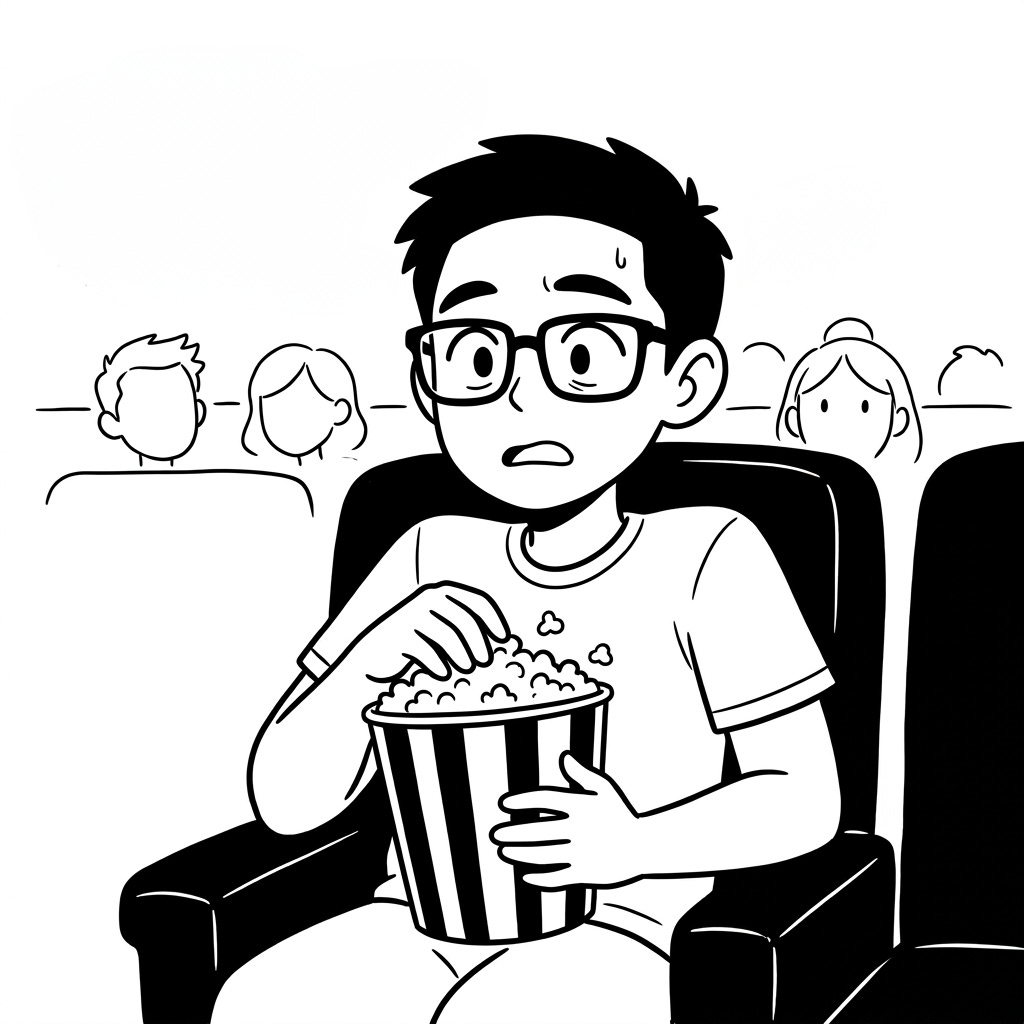
The second costume came courtesy of Hollywood, and it grew up right alongside me.
Somewhere along the way, AI stopped meaning M. Bison from Street Fighter II and started meaning the machine that has an awakening. Sometimes the machine was kind and worked for the good of humankind. Sometimes the machine looked at humankind, did some quick math, and decided, “yeah, gonna get rid of these fleshbags real quick”. You already know the movies.
I’d rather point at the stranger one. There’s a Spielberg film from 2001 called, quite fittingly, A.I. It wasn’t the friendly-robot story and it wasn’t the destroy-all-humans story. It was the uncomfortable middle, a story about a machine that mostly just wanted to be loved and a world that didn’t know what to do with it. Nobody in that movie quite knew which camp to be in.
What a wild time. For this entire stretch, AI was not something you used. It was something you imagined, and mostly something you were a little afraid of.
When AI showed up on your actual desk
Then the third costume arrived, and it’s the one we’re all still adjusting to. AI stopped being imaginary. It became a tool sitting right there on the desk, doing actual work.
It helps researchers move faster through the kind of deep work that used to take months. It shows up in healthcare. It proofreads the email you were too tired to read twice. It sits in the room while you write and offers you a second set of eyes that never gets bored.
I’ll say my own piece plainly, because I’ve earned the right to an opinion here. I’ve worked as a multimedia creative for more than twenty years, and I find AI genuinely useful in my own writing and creative process. It’s one of the most capable creative tools I’ve put my hands on. I’m not embarrassed about that and I’m not going to pretend otherwise.
And in the very same breath, I cannot stand the slop.
You know the slop. The thoughtless, obviously-generated content, churned out by people who clearly didn’t read it before they posted it, recycled endlessly to the benefit of just about no one. It’s lazy and it’s just about everywhere (especially on your parent’s Facebook feed). And it gives the whole technology an off-odor that the technology doesn’t entirely deserve.
Here’s the part that the loud people on both sides have trouble with. I think the tool is remarkable and I think a lot of what it produces is garbage, and I hold both of those opinions without straining. One doesn’t cancel the other. I don’t have to talk myself down from the praise to make room for the criticism, or soften the criticism to keep the praise.
Why we still want to beat it
So here’s the strange place we’ve all ended up at.
One group of people loves this technology and wants to use it for everything. Another group wants to burn it to the ground in all of its forms. The conversation between them is less of a conversation and more of a standoff, and most of us are standing in the middle wishing everyone would lower their voices (I work at 6:00 a.m., thank you).
And I think, in a way, we’re right back in those old video game afternoons. A lot of people, deep down, just want to beat the AI.
That reflex makes a strange kind of sense once you remember where it came from. We met this thing as an opponent. The first definition any of us ever learned was the one where the entire point was to defeat it. So when a genuinely useful tool shows up on the desk decades later, some part of the old wiring still reads it as the boss at the end of the level. Or even a scary thing that threatens to take over the planet. The frame never got updated. The instinct to win against it is a leftover from a version of AI that either doesn’t exist anymore or was made up by some dudes in a writer’s room.
But the thing on your desk isn’t a boss fight. It’s not an overlord. It never picked a side. It’s just sitting there, capable of real help and real garbage depending entirely on who’s holding the controller.
The position nobody will let you hold in peace

The useful stance, the one I keep landing on, is the balanced one. And it happens to be the one neither camp will let you stand on without yelling at you.
You’re allowed to praise it and criticize it in the same sentence. You’re allowed to find it indispensable for your work on Monday and roll your eyes at a slop article on Tuesday. Knowing the nuance of where it actually helps and where it actually hurts is the entire practical skill, and it’s a skill, not a betrayal of one team or the other.
Whether you use it at all is a decision that lands on you, and honestly, it should. Not on the camp that would shun you for touching it, and not on the camp that would high-five you for posting something you didn’t write. It’s all on you.
Maybe one day the two sides drift toward the middle, and AI gets seen the way we eventually see every tool, as a thing that’s neither good nor evil, just useful in some hands and wasteful in others. I’d like to be around for that.
I miss the joypads
Some afternoons I do miss the old definition. The one where AI just meant the latest RPG to outwit, with an SNES controller in one hand and a soda within arm’s reach of the other, treating Mountain Dew like it was the water of life.
Although, on reflection, maybe I’ll leave that last Mountain Dew-fueled part in the past. My 40+ year old body tummy aches, just thinking about it.
The controller is gone either way. The thing I used to spend weekends trying to beat now sits quietly on my desk, waiting to help me write the very sentence you’re reading. Though, I guess a part of my noggin is still saying “beat the AI!”. Maybe that’s the actual work now, for all of us. Not beating it, and not worshipping it. Just finally seeing it for what it is.
😂 all I could think about while reading this is, us humans just want so desperately for stuff to be easy and black and white, A or B, red or blue (hehe) and it’s NEVER that simple! Things can be lots of things at once. What if we embrace that instead of fighting about it or trying to “solve it once and for all” like it’ll be settled or something. Argh! Human experience — so annoying sometimes! 😂😂