
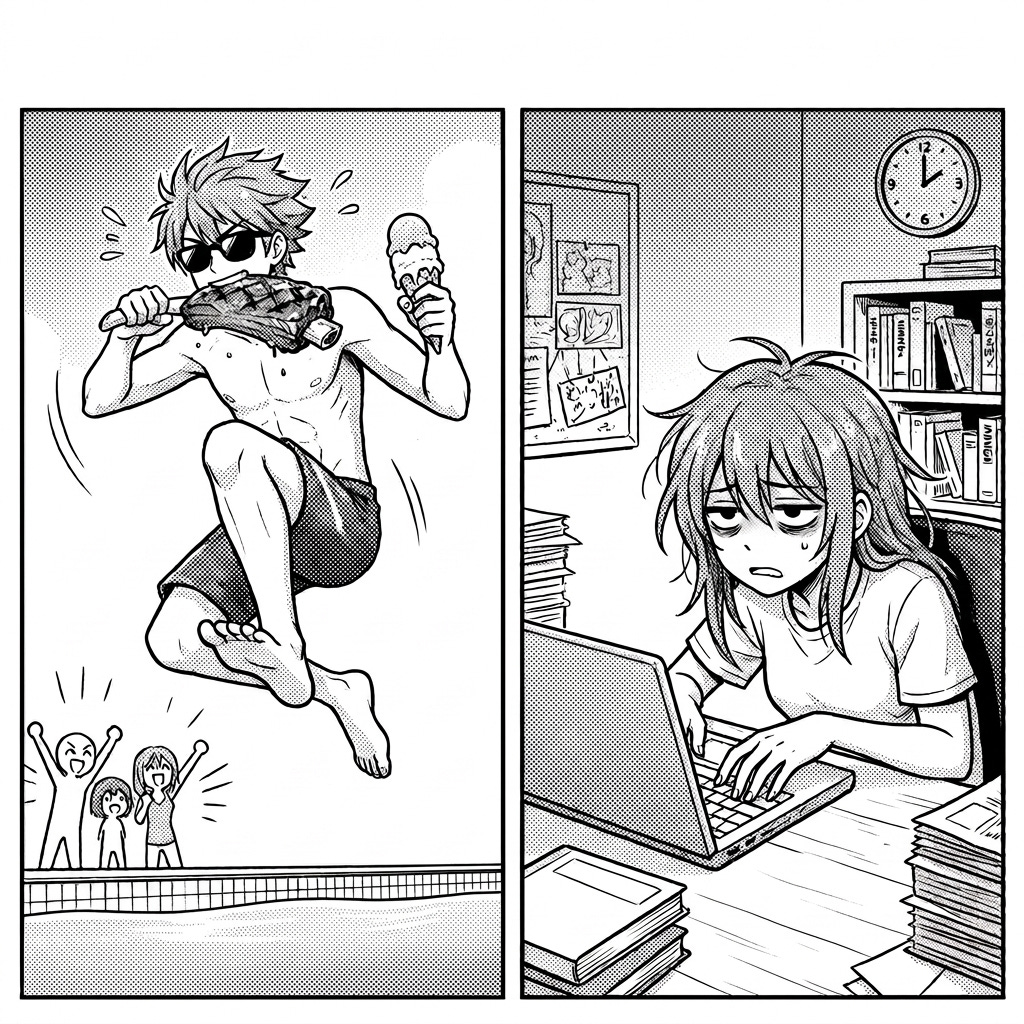
Let’s say you decided to spend an afternoon letting AI write your article (even forgoing Cool Steve’s 5th Annual BBQ & Ice Cream Bash). So you hand the whole thing over and wait. What does it give back? Well, it’s certainly smooth in terms of grammar and flow. But it’s bland, and now it is effectively no longer yours.
Because of this, the common thought is that “AI can’t write” (and it made you miss out on Cool Steve’s trademark “banana pranks”). The reality is that AI is a very weak writer on its own. It can, however, be a very effective editor. And this article will guide you in applying this in your writing.
Why AI writes badly but edits well
When you let AI write on its own, it gives you that bland, median content, the middle-of-the-road stuff we’ve all started to notice everywhere. Letting it edit is a different animal. You arm it with your voice, ideas, and all the raw materials that form the context of your article.
Think about it this way: imagine you hire a contractor to build your house, but you give him no instructions whatsoever. He’s fully capable, but without direction, you might get the most random house possible (1 bedroom, a toilet next to the stove, which is technically not a bad idea… on second thought, never mind). It’s likely that it’ll be dangerous to live in as well. But give him all your preferences (style of home, size, number of rooms, a kitchen hood that sucks all of the stove smoke right out of the house, etc.), and you end up with the home of your dreams, worthy of a Cool Steve-esque BBQ bash.
The point is that your first draft is those instructions. Writing it yourself is how you hand the tool your preferences, style, and voice all at once. With this draft, you give the AI tool what it desperately needs to do decent work: context. What the article is about, the points you want to hit, your humor and vibe, all of that good stuff. With your point of view to work with, AI has what it needs to help you sharpen that draft into a refined article.
How do I pull this off?

So now that you’ve got a killer draft, what’s next? Follow these steps to further get that content closer to what you’re dreaming up.
Paste your finished draft and tell it explicitly not to rewrite, only to diagnose.
Ask for specific categories of feedback, not “make it better.” Clarity, flabby sentences, weak spots, places a reader might drop off.
Have it flag the three weakest sentences and explain why, so you keep control of the fix.
Then, the most important step: you make every final edit by hand, overruling anything that doesn’t match your authentic voice.
In fact, here’s a prompt that will help you with steps 1-3:
Below is a finished draft I wrote. Do not rewrite it. I want you acting as my
editor, not my ghostwriter.

First, read it closely and tell me where it drags: the flabby sentences, the
unclear spots, and any place a reader might lose interest and click away.

Then point out the three weakest sentences specifically, and explain WHY each
one is weak, so I can decide how to fix it myself.

One rule you can't break: keep my voice intact. If you spot an unusual word
choice, a joke, or an odd bit of phrasing, assume I did it on purpose and leave
it alone, unless it genuinely breaks the sentence. You're checking my work, not
replacing my personality.

Here's the draft:
[paste your draft here]
Resist these temptations (and I don’t mean the singing group)
At any point of your writing process, you may be tempted to tell your AI “just fix this mess for me!” Resist any temptation to do this, as it will undo all of your hard work. When you let AI overedit your content, it becomes a technically-correct word salad that says a lot but means very little. It’s like the time Cool Steve’s cousin (you know, Wordy Bort) was at that analyst job interview, telling them all about his time “managing multiple systems while monitoring fault points and restoration systems,” which was a fancy way of saying “I make sandwiches at home all the time.”
Another downside of putting full trust in AI is what it does to all of your stylistic choices. This is especially true when you use unique word choices and humor. If you don’t inform the tool, it will identify all your cool stuff as errors, misspellings, and incorrect sentence structure. You’re the one that knows all of these are on purpose. But AI doesn’t know, and it will remove them or make you sound incredibly awkward. You’ll end up in Wordy Bort territory, real quick.
Cool writing that belongs to you
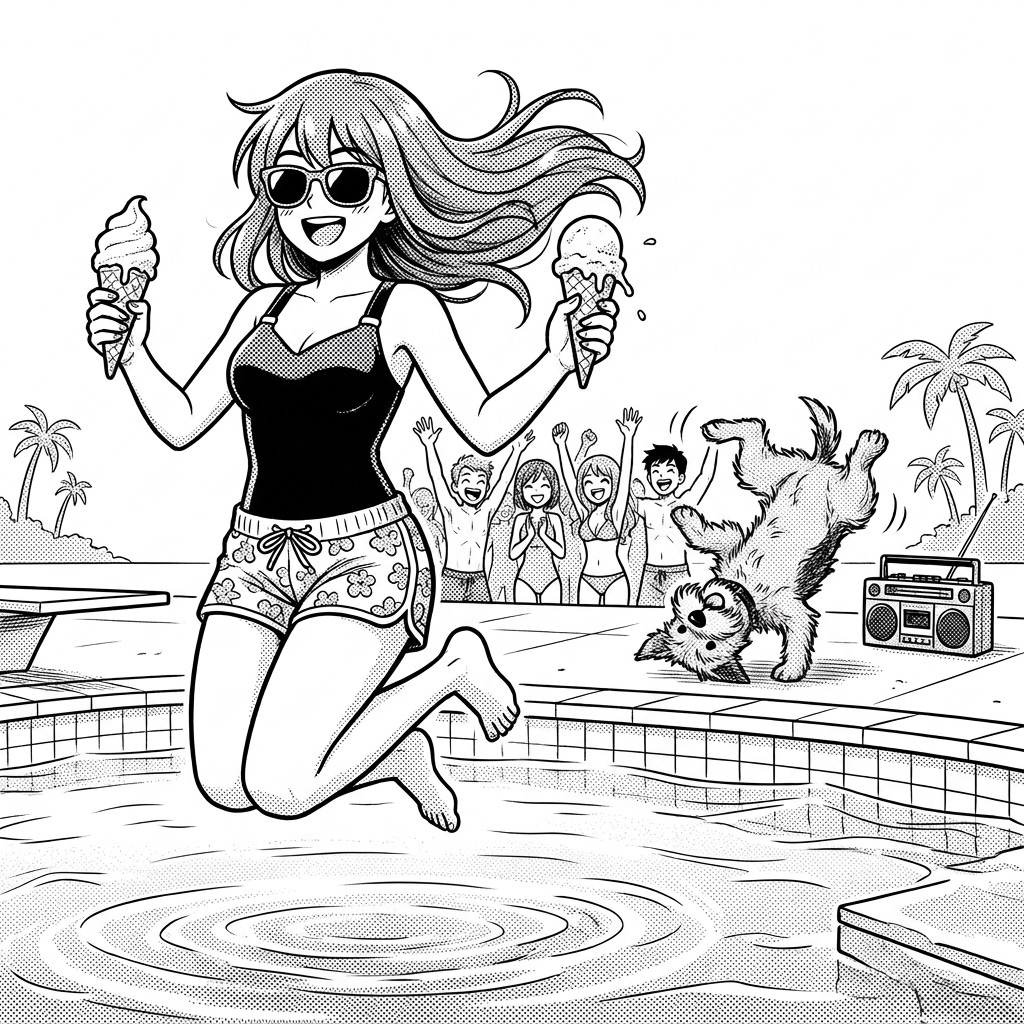
You have so many great ideas in that ol’ noggin of yours. Don’t throw them all away by letting AI try to write about them, all by itself. You’re an awesome writer. Your content just needs a good second read, and that’s exactly what AI is built for. I always say, “AI is the tool, never the artist.” So let it be the never-tiring tool that reads your content closely. Assigning it the role of full-time “second pair of eyes” is a habit that will serve you well in your writing endeavors.
If you’re struggling with your write-ups, give the guidance in this article a shot. As long as you remain the writer, it can help you further refine your incredible writing. And you just might free up that weekend to go see Cool Steve’s breakdancing dog.
Did you enjoy this article? Let me know what AI tips & tricks you use to keep your weekends full of Cool Steve antics. I read every comment!