

You know the stock photos, right? The four coworkers in pressed button-downs crowded around a single laptop, every one of them howling at something genuinely hilarious happening inside a spreadsheet. The woman laughing alone with her salad. The two businessmen shaking hands so warmly you’d assume one of them had just donated the other a kidney. The rugged fellow staring out of a high-rise window, contemplating either a merger or the full weight of his existence (hard to say which one it is). The team of attractive thirty-somethings doing trust falls at a “workshop” with no discernible purpose. Gotta love that corporate stock photo account.
One confession, though: I made all of those up. I’ve never actually seen any of those. But you pictured them instantly, and you believed they were real for a half-second. That right there is the whole point of this article.
Every one of those images is technically a photograph. Real camera, real people, and wouldn’t you know it, real salad. But not a single one of them means a thing. They were built to be dropped into any brochure, for any company, selling any product, landing on exactly nobody and sticking with exactly no one.
With that in mind, there’s a very good chance your AI’s first draft is the literary cousin to the laughing-salad lady.
The median is a crowded place
This is something you’ve probably felt, even if you never put words to it. You ask one of these tools for help. You get something back. It's smooth, it's grammatical, and you forget it the second you look away. And it is weirdly hollow, like it was written for everybody and therefore landed on nobody.
None of that is a glitch, and none of it is your fault. The tool did exactly what you asked. When you hand it a blank instruction like “write me an intro about productivity,” you’ve given it no reason to sound like anyone in particular, so it does the only thing it can. It reaches for the median. The most expected version of every sentence, the safest word in every slot; in other words, the middle of the road.
And the middle of the road, as it turns out, is where the laughing-salad lady lives. It’s crowded down there. Everyone using the same tool with the same blank instruction is pulling from the same crowded middle, which is exactly why so much of the internet has started to sound like it was catered by the same beige sandwich platter.
“Wouldn’t it be nice to fix that?”
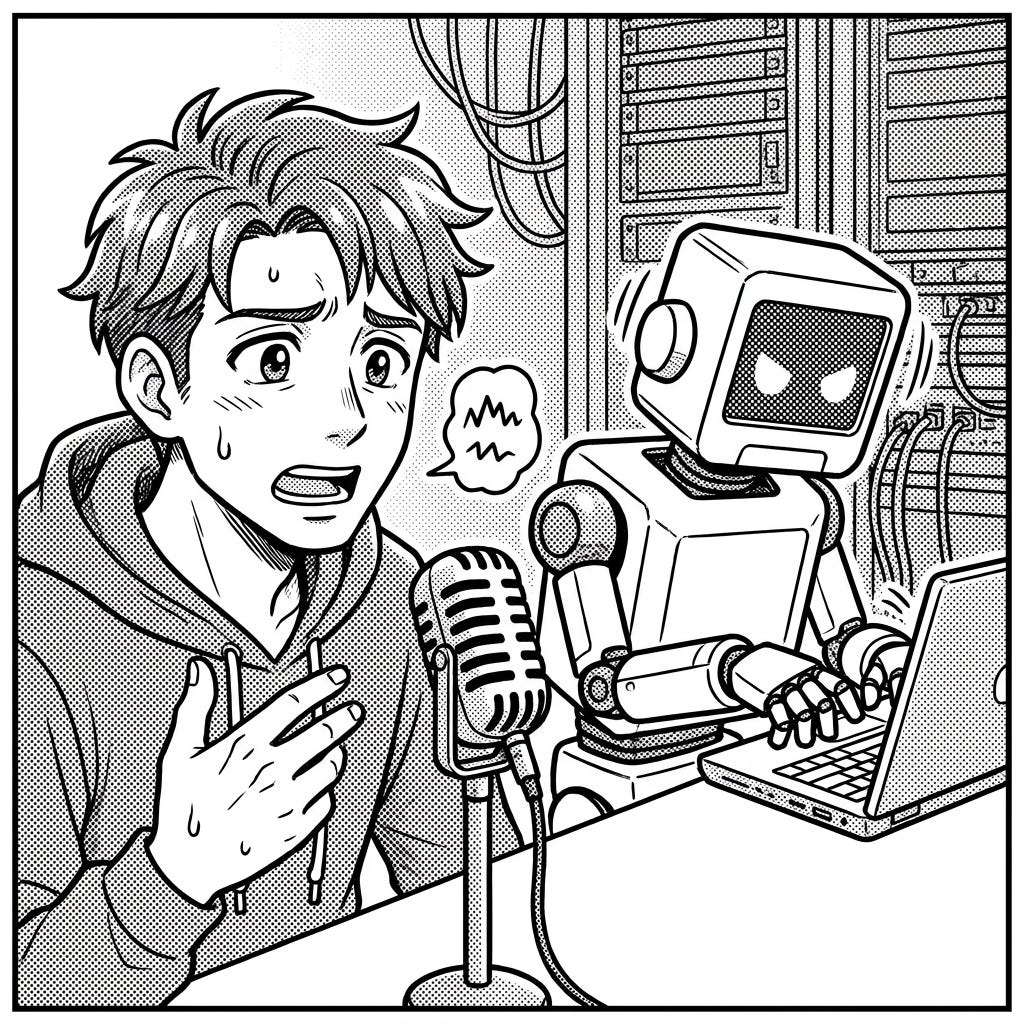
So let me ask the obvious question. You’ve got something to actually say. The tool genuinely does help you say it faster. Wouldn’t it be awesome if all that speed didn’t come at the cost of you sounding like you?
Good news, friends. It’s fixable, and the fix isn’t some galaxy-brained prompt-engineering ritual that requires a certification. It mostly comes down to giving the tool the one thing it has never once had: you.
This is a rough idea of what that looks like.
The first step is to teach it your voice. The tool has never read a word you’ve written. It does not know that you open with a joke, or that you’d sooner eat the salad-lady’s salad than use the word “leverage.” So show it what for. Take a few things you’ve written that sound the most like you, paste them in, and ask it to study them. Something close to this does the job:
Here are a few samples of my writing. Describe my voice in detail: my sentence
length and rhythm, my punctuation habits, the words I reach for, and the words
I'd never be caught using. Write it so I can paste your description back to you
later, to guide how you write for me.
Hang on to whatever it gives you. That little description is the entire difference between a tool that’s guessing about you and a tool that has, in some small way, actually met you.
The second step is to feed it context. Who is this for? What’s the point you’re trying to land? What’s the one thing you absolutely do not want it to do? The more it knows about the job, the less it reaches for that crowded middle.
The third step is the one people tend to skip, and it’s the one that matters most. You stay in the editor’s chair. The tool drafts; you decide. The second it makes you sound like a press release that gained sentience, you overrule it. That's the actual job, and it always was, because you're the only one in the room who knows what you meant.
The part the hype skips
Notice what none of that was. At no point did the plan become “let the robot write the whole thing while you go get a coffee and come back to a finished masterpiece.” That version is the one that produces the salad lady every time.
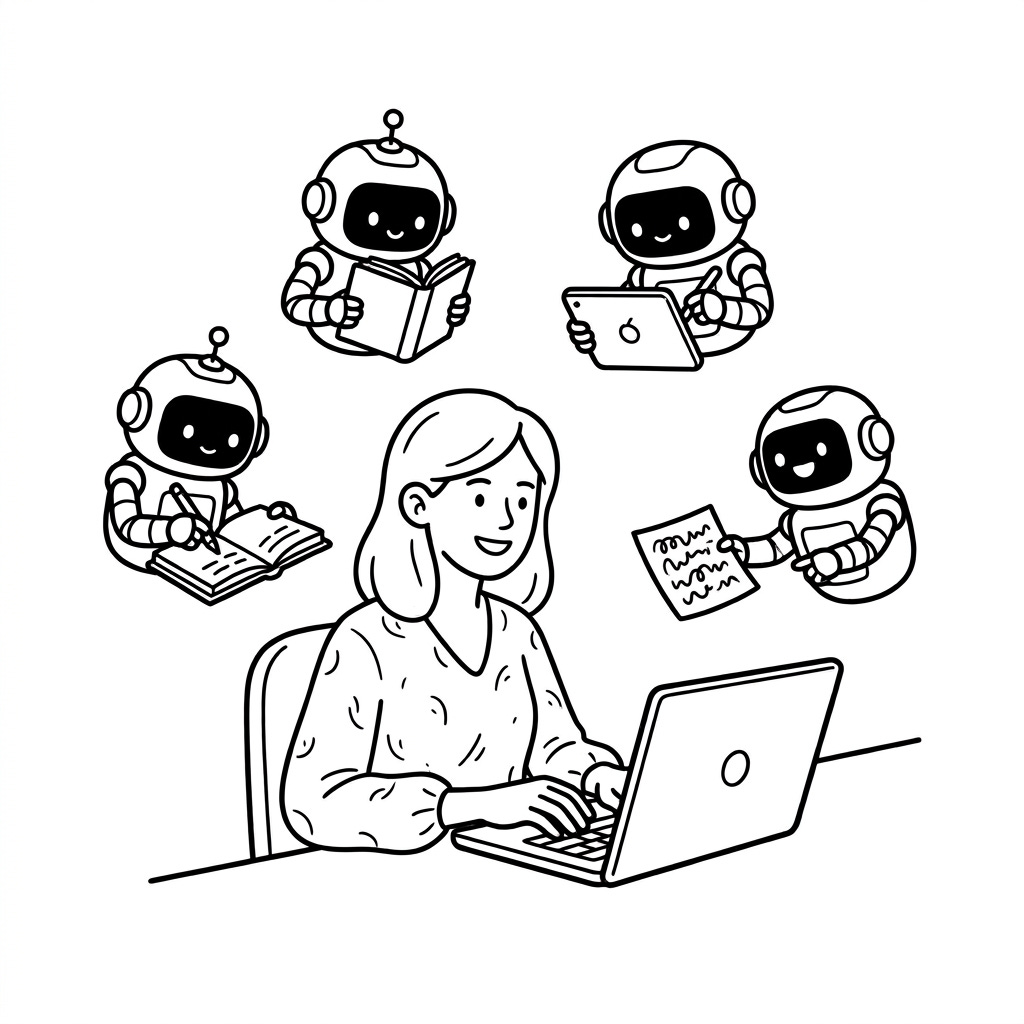
The reframe that fixed this for me is small but it changes everything. You're doing the work with a very fast, very tireless assistant who happens to have zero taste of its own. The work never actually leaves your hands. You bring the take, the angle, the actual thing worth saying. It brings the speed and the willingness to proofread the same paragraph forty times without sighing at you. You stay the author. It stays the intern who types quickly and needs a firm hand. Get that division of responsibilities right, and the speed stops costing you the soul of the thing.
Hand it the one thing it can't fake
Think back to the stock photos again. The reason the laughing-salad lady never moved a single human being is that she was manufactured for all of them at once. Your writing has the exact opposite assignment. It’s supposed to sound like one specific person had one specific thing to say, to one specific reader, on purpose.
That difference is sitting right there, waiting for you, every single time you open one of these tools. You just have to be willing to hand it the one ingredient it can never fake on its own.
Because the robot can match your grammar all day long. The thing it can’t do is sound like you, right up until the moment you show it how.
And that “how” is more of a system than a single trick. I’ll be getting into it very soon, so keep an eye out.

Enjoy this one? If you’ve got your own way of keeping the salad lady out of your drafts, drop it in the comments. I read every one. And if you found it useful, sharing is caring!